Core Circle | Increasing Retention Rates With Social Gamification
Role
UX Researcher & Designer
Methodology
Timeline
2 months
Client
Fitness tracking app
Target User
Gen Z & Millennials who want to share fitness progress with friends and family
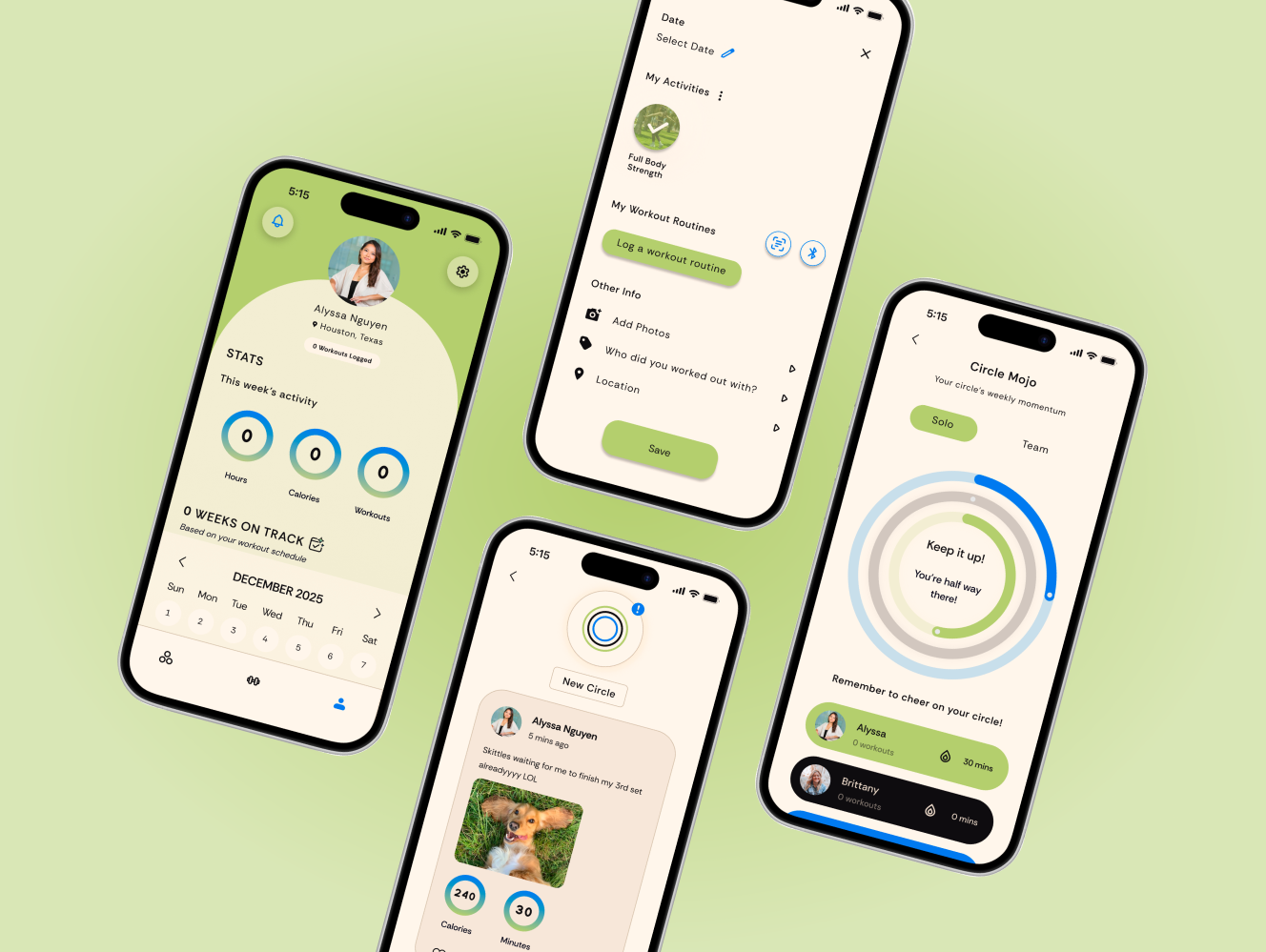
Core Circle users were deleting the app after only three weeks of usage, despite strong initial engagement. The company wanted to add integrated messaging believing it would increase repeat usage and engagement. However, what seemed like purely a drop in usage, was really a symptom of users struggling to stay consistent with their fitness routines off app.
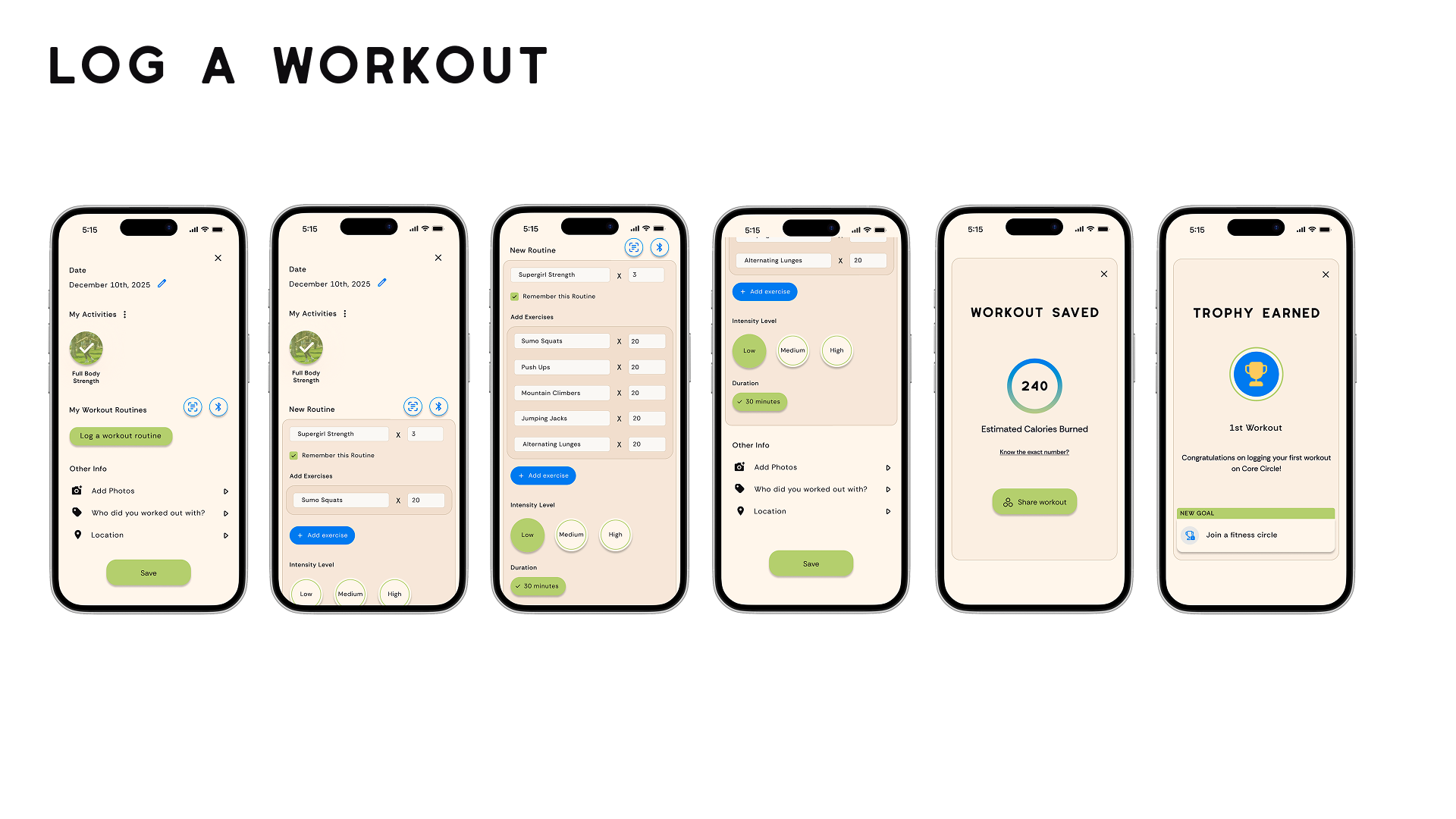
My research revealed the real problem: users needed more support to fully develop a workout habit. I structured the experience around workout habit formation steps, flexibility, and messaging as form of accountability. While users found the experience fun to do with friends, results indicated the messaging feature needed clarification and workout logging needed more automation and shortcuts.
The premise for this project was created by Springboard who provided me with the design brief including the background information, problem space, project goals.
Context
Core Circle is a mobile fitness tracking app that helps friends and families stay accountable by sharing their progress. Engagement was strong for the first few weeks of usage, but around the fourth week users dropped off and eventually deleted the app. The company wanted me to add integrated messaging to increase user engagement and repeat usage. However, I needed to understand what was actually causing people to delete the app in the first place and validate whether integrated messaging was really the right solution.
KEY RESEARCH INSIGHT
Users were struggling to develop consistent fitness routines, which meant when they abandoned their routine they abandoned the app.
While motivation can kick off a fitness journey, consistent routines are built through habit formation. Habits get tested when routines break. Could a user bounce back after missing a scheduled workout? Or after failing to finish an unrealistic workout? Research indicated Core Circle wasn't providing users enough support to build and maintain workout habit. Adding integrated messaging alone would not help users develop a workout habit, but it could help reinforce one. However, its success depended on how interactions were structured.
DECISIONS I MADE
I decided to research the root problem, not accept the brief at face value.
Without real user data to investigate the cause of drop off, I examined three types of secondary sources: academic research (articles and journals), personal accounts (forums and blogs), and competing platforms (direct and indirect competitors). By assessing the problem from multiple angles- science, lived experience, and industry patterns- the real issue was revealed: weak habit formation support.
I decided to center the experience around habit formation, not a messaging feature.
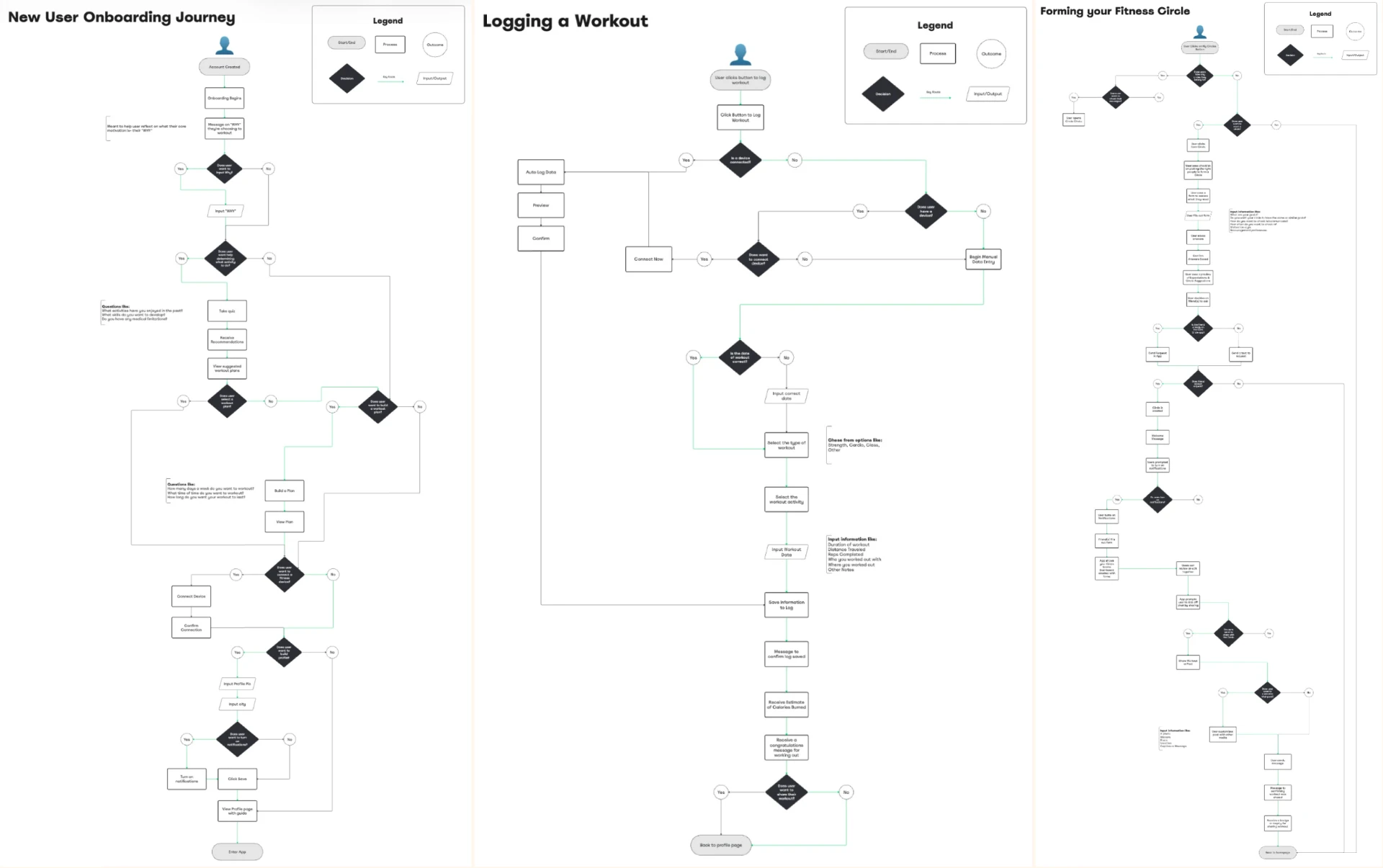
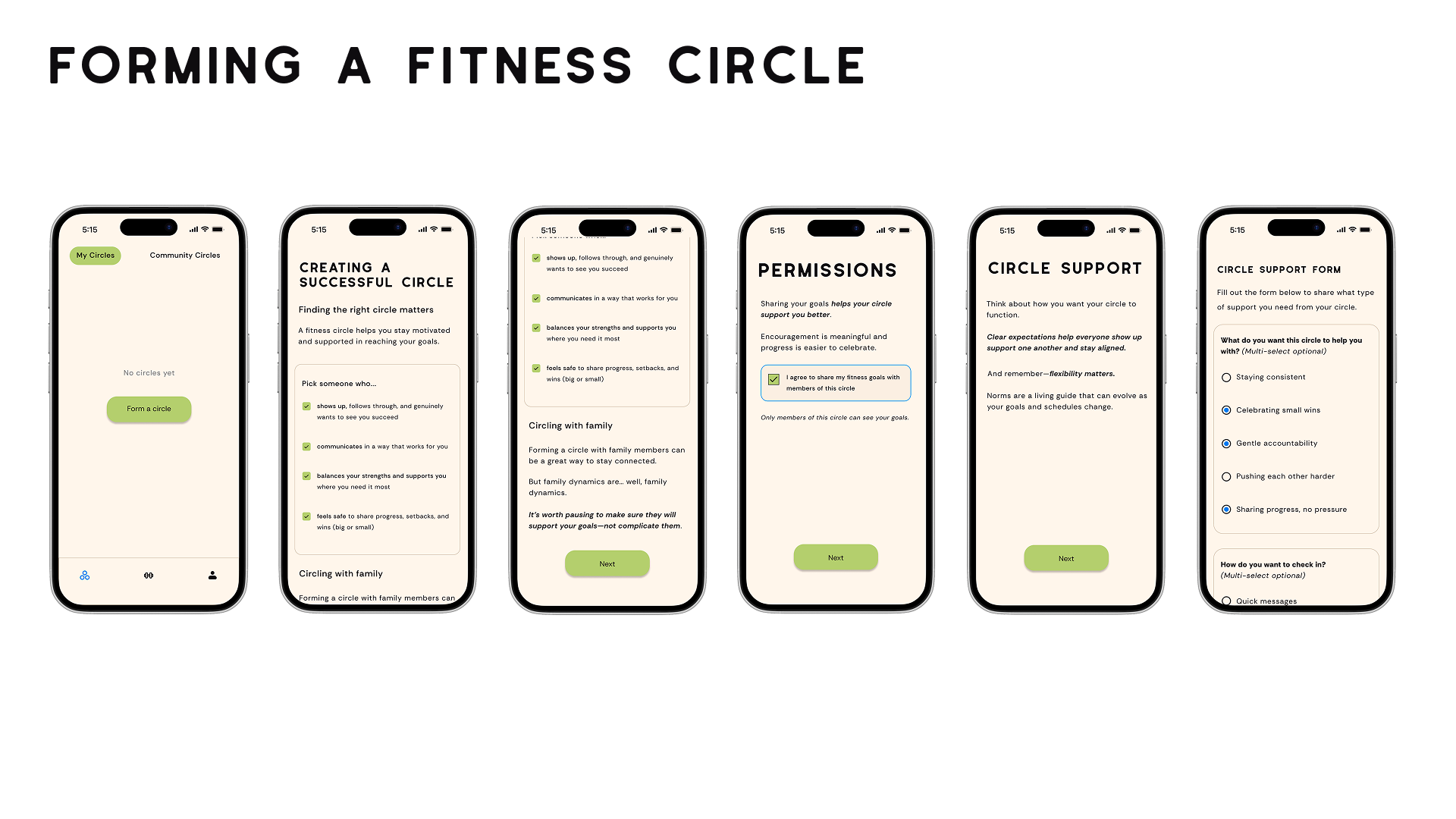
The primary goal for people developing a workout habit is moving their body consistently. I structured flows around the habit formation steps—establishing purpose, choosing an enjoyable activity, creating a realistic routine, and tracking progress—while prioritizing consistency over performance metrics. This framework ensured every feature served one goal: supporting users through the critical first weeks.
I decided to embed adaptability throughout the app to combat user defeat and drop-off.
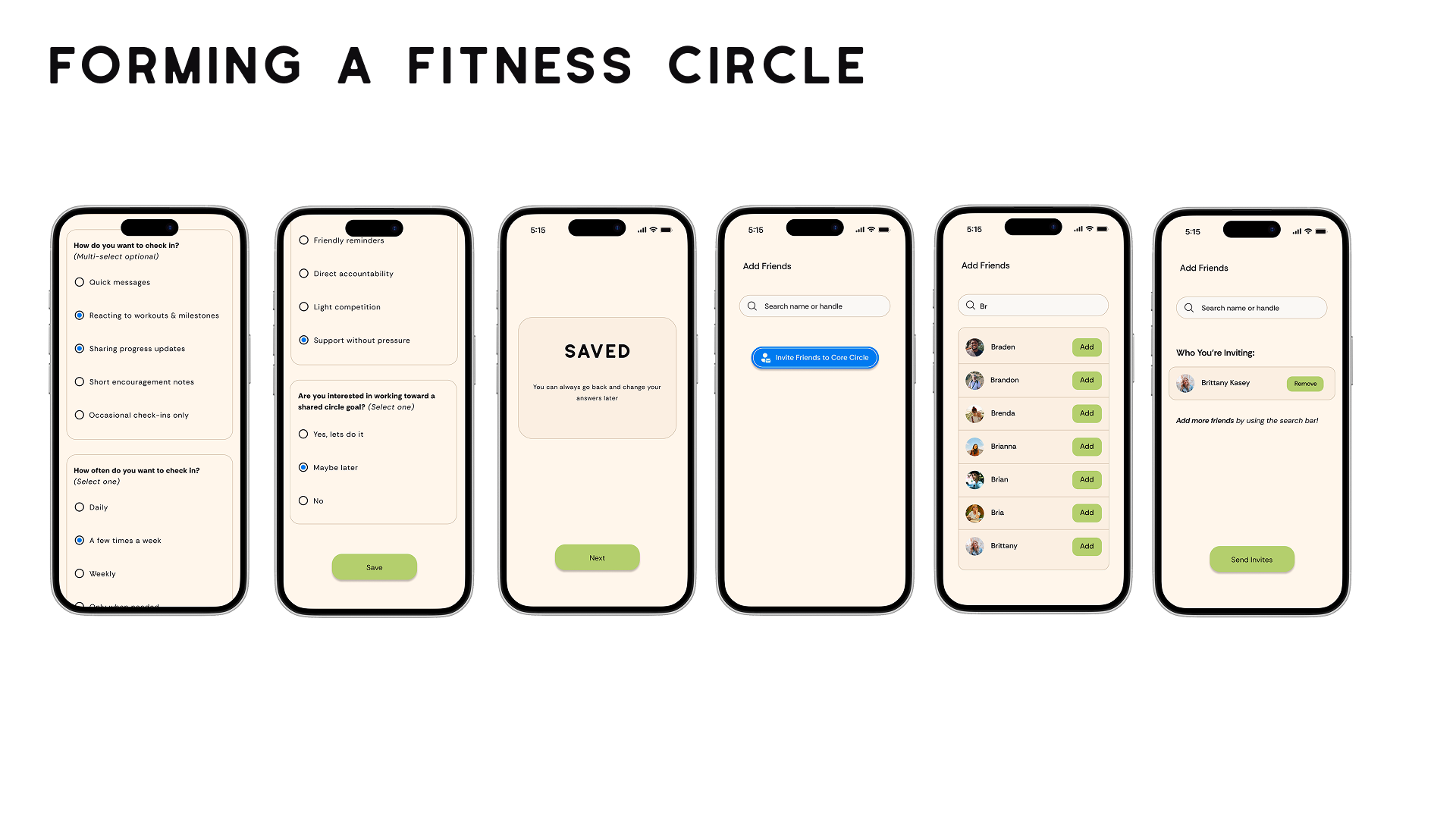
As a former educator, I knew mistakes are part of learning, and it would take time for users to discover what routines worked. Rather than punish setbacks, my design allowed users to change any aspect of their routine without judgment. I extended this principle to messaging. I structured it to function like an accountability relationship where users could establish and modify relationship expectations. By making both routines and relationships adaptable, users learns to adapt instead of abandon.
HOW I DID IT
I had two possible explanations for the drop-off: either the app had limitations that deterred users, or users were struggling to maintain fitness routines in real life and the app did not help them.
To explore these possibilities, I began by asking: What prompts someone to begin a fitness journey? What psychological and behavioral factors support long-term habit formation? Does having an accountability partner affect someone's ability to build a habit, and if so, how? What messaging and gamification features are effective, and have they been used in fitness apps before?
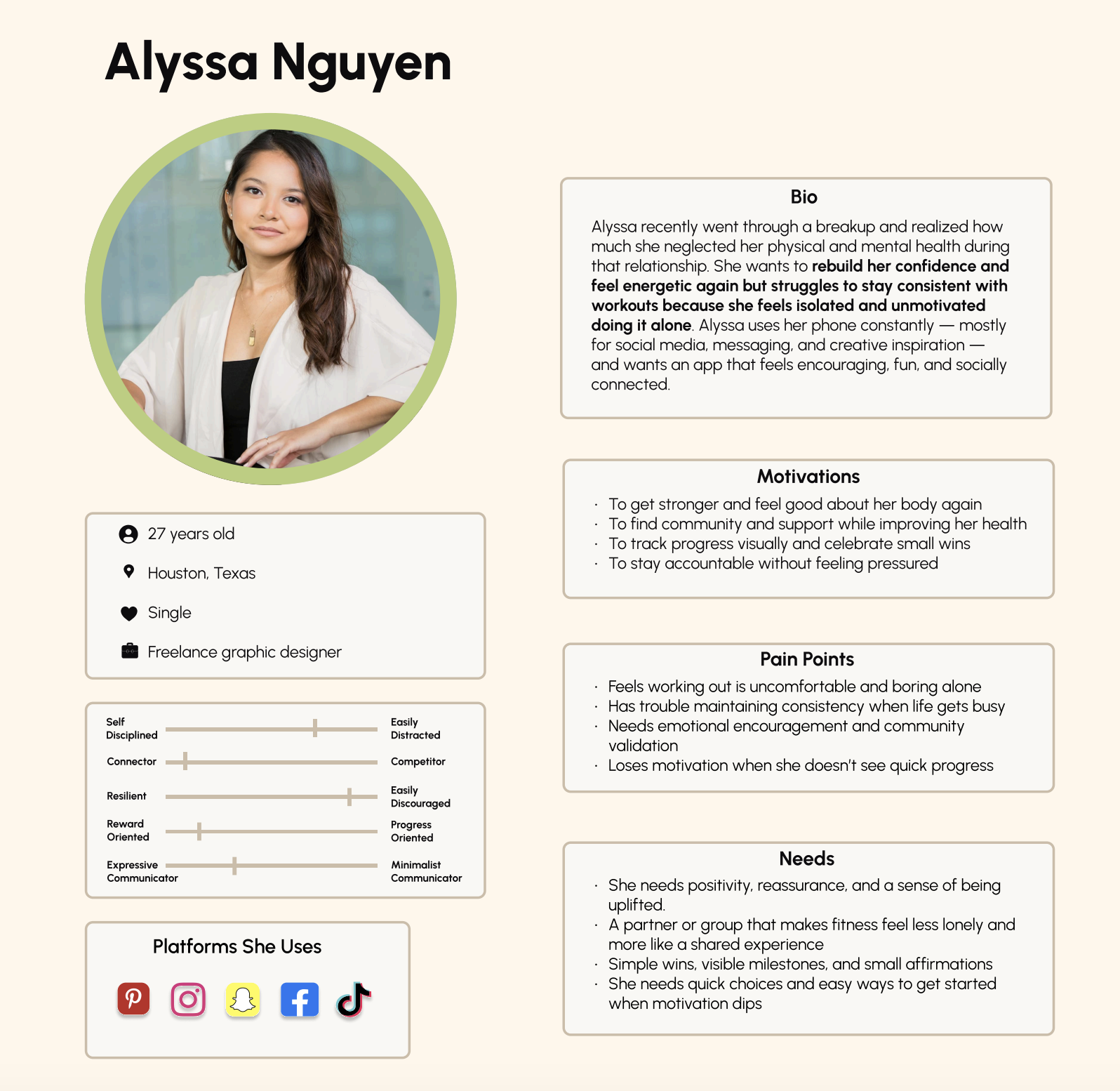
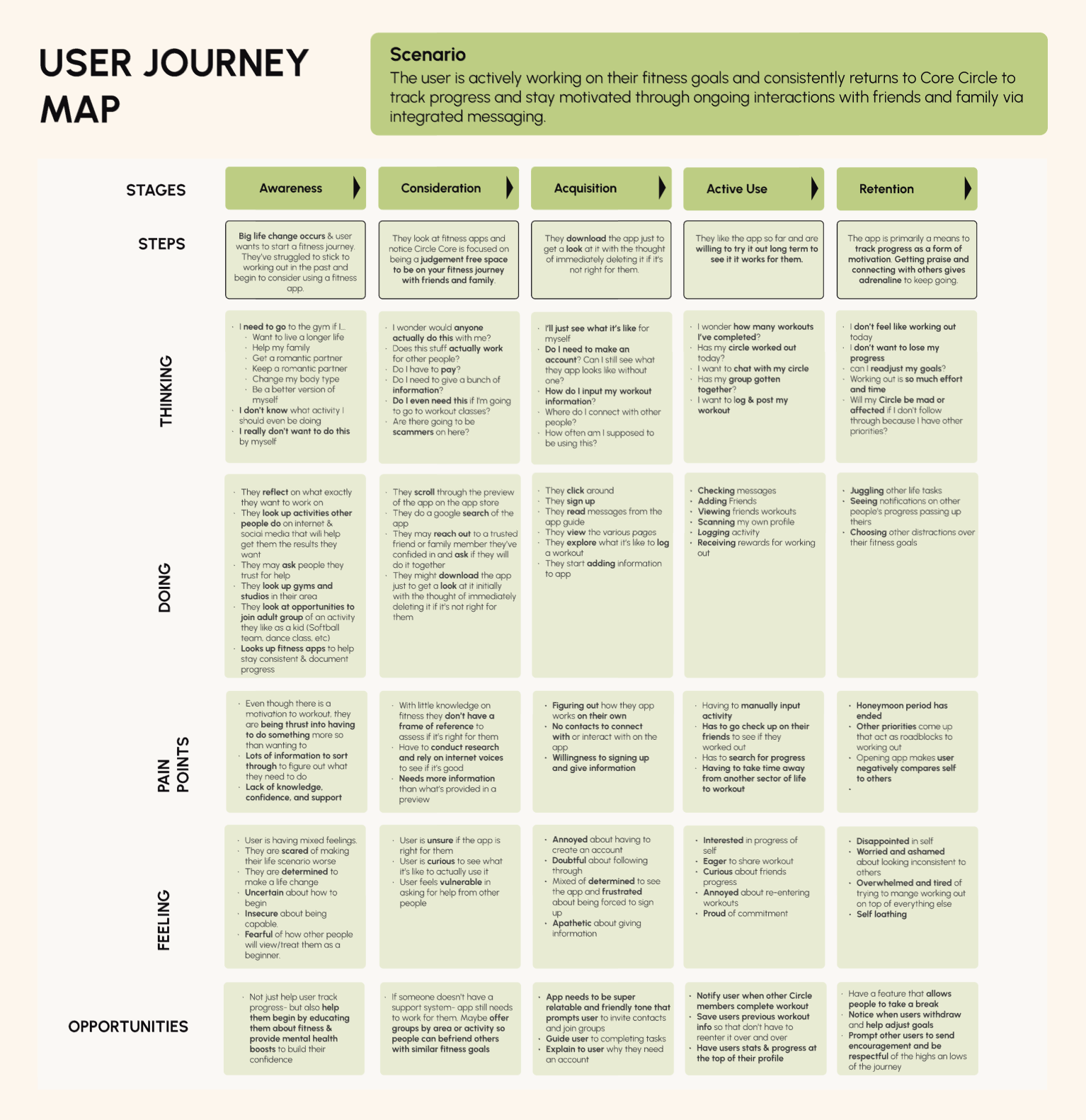
I examined a mix of secondary sources and conducted a competitive analysis of six companies to find out. After I identified that habit formation was the core need, I explored behavioral patterns further by developing personas and a user journey map to fully to understand the early drop-off moment.
Then, I scoped the MVP by crafting user stories and developed three user flows rooted in each step of fitness habit formation. Then I created a mood board, style guide, and jumped into high-fi prototyping.
I conducted two rounds of usability testing with eight users total. Six users worked out consistently, one inconsistently, and one did not work out at all. Four of the tests were conducted in person and four were remote due to scheduling constraints. Finally, with a fraction of time left, I reiterated my design to quickly fix some of the critical and major usability issues from the second round of testing.
Solution
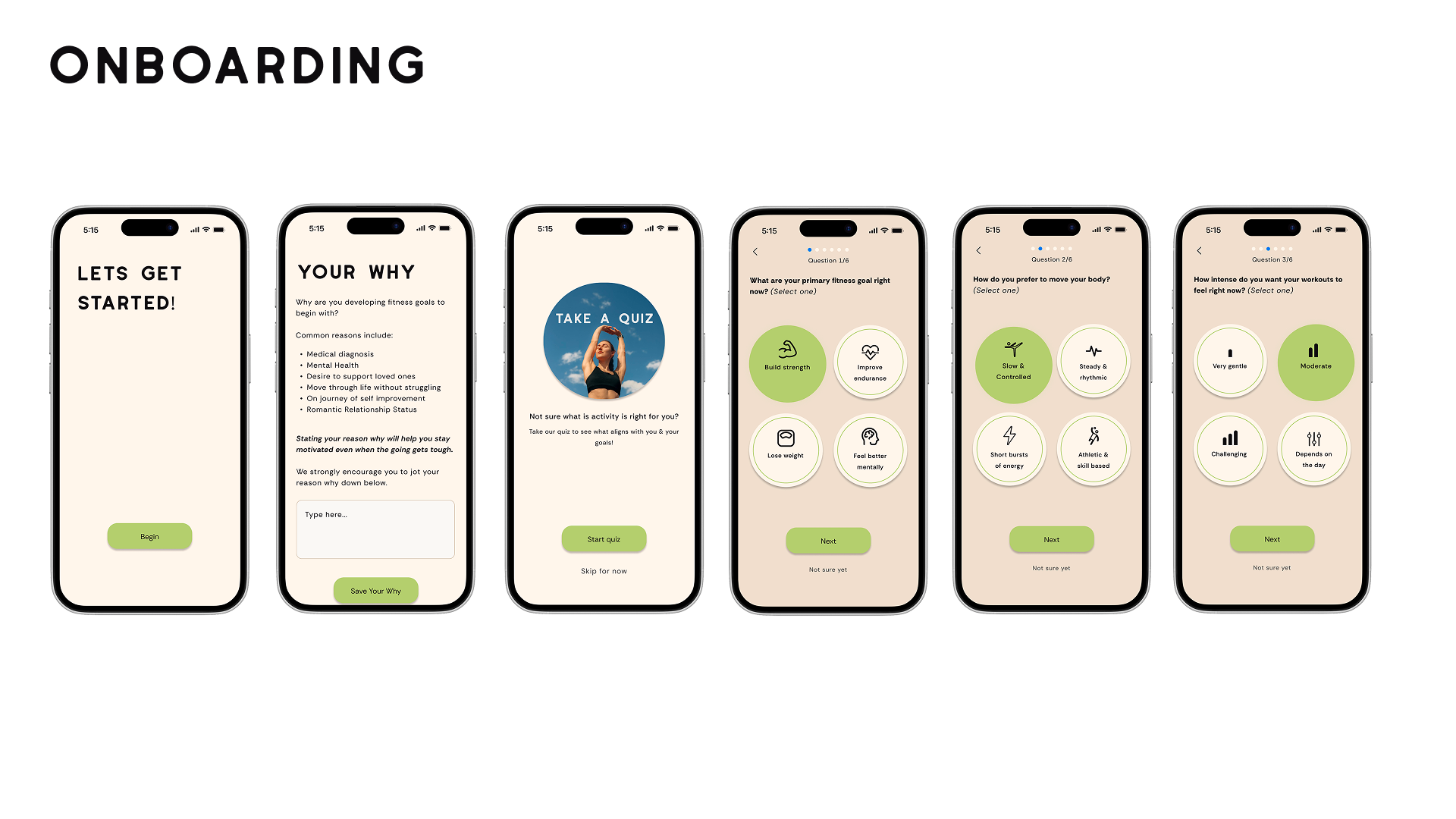
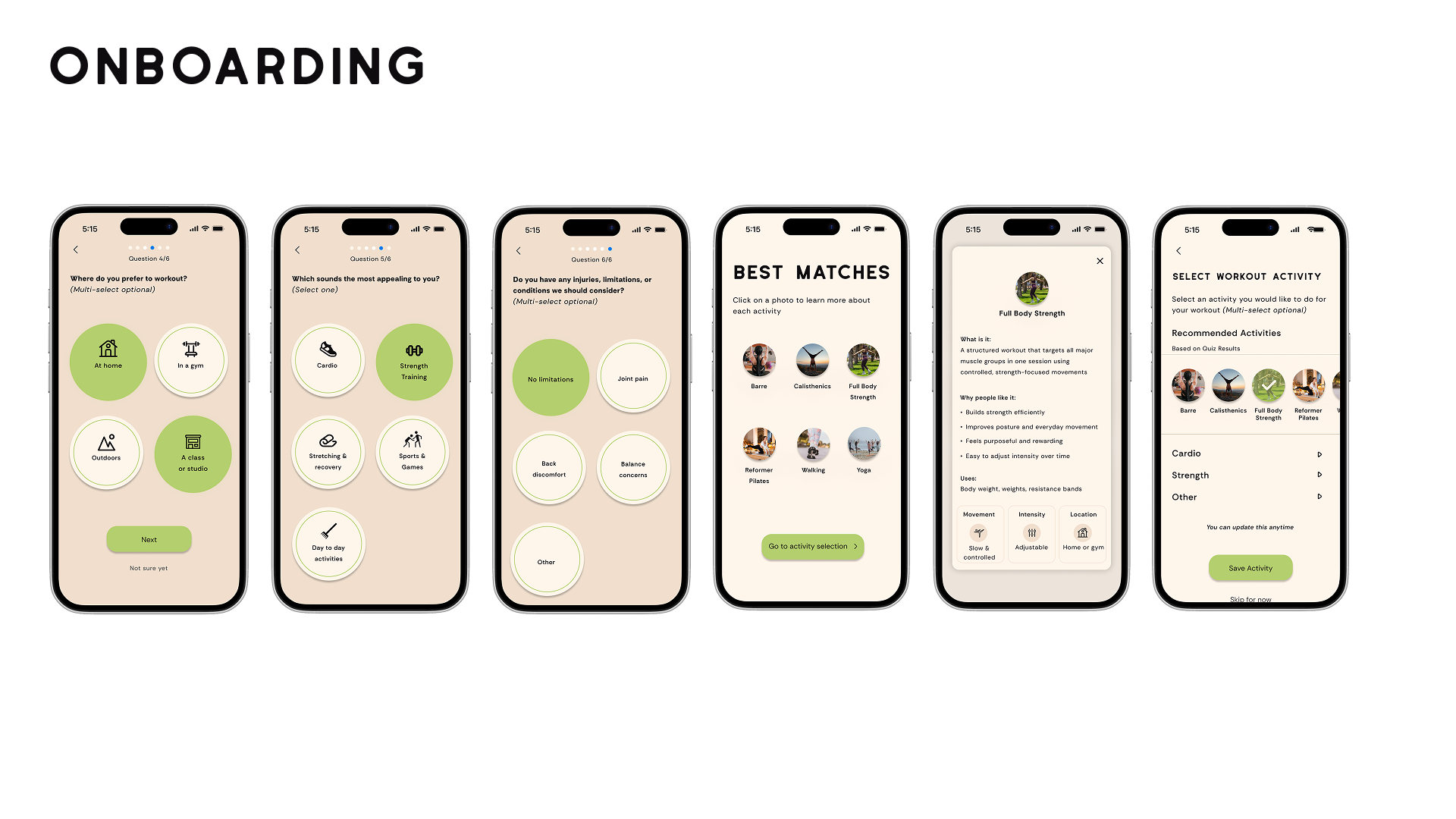
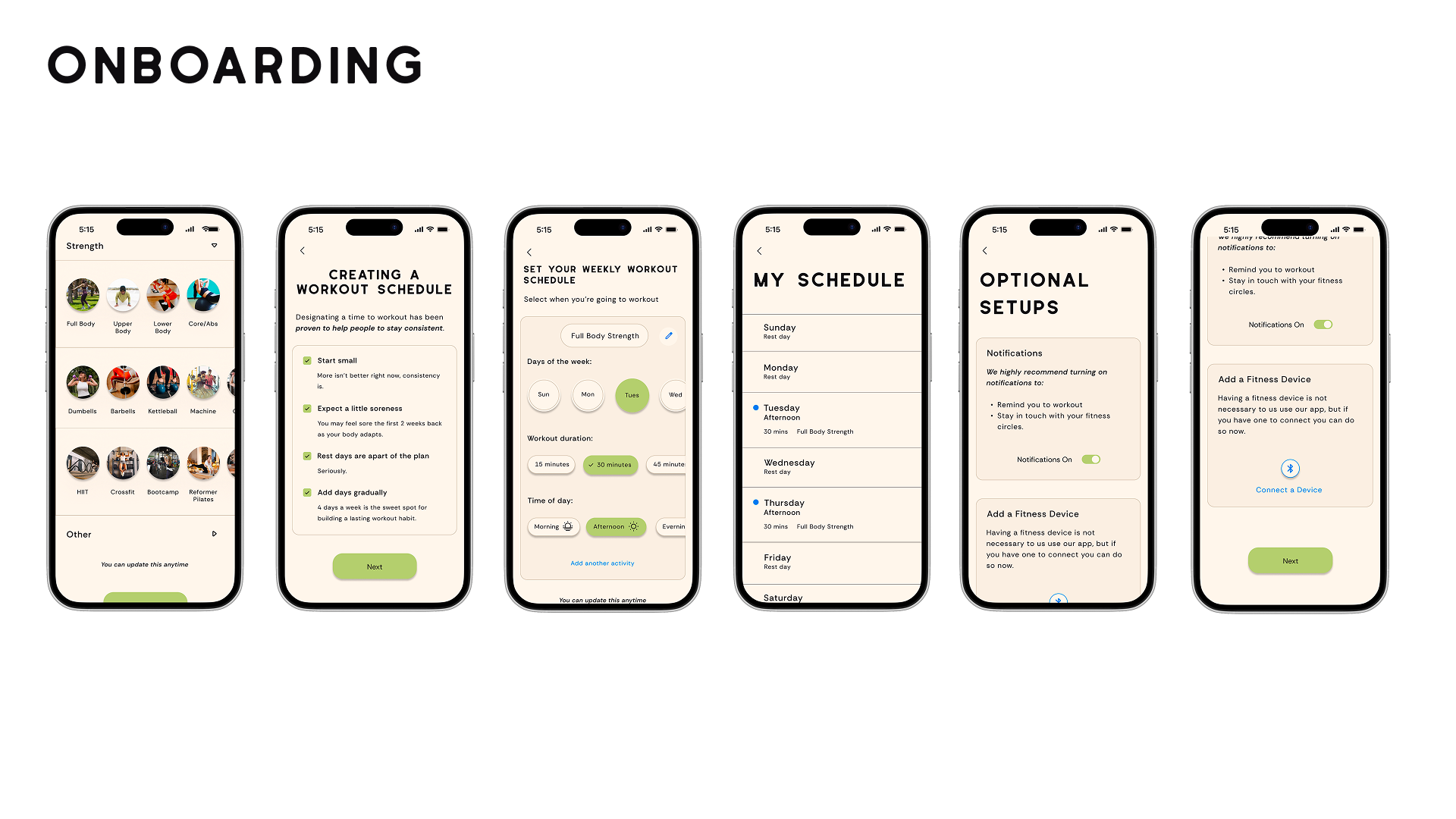
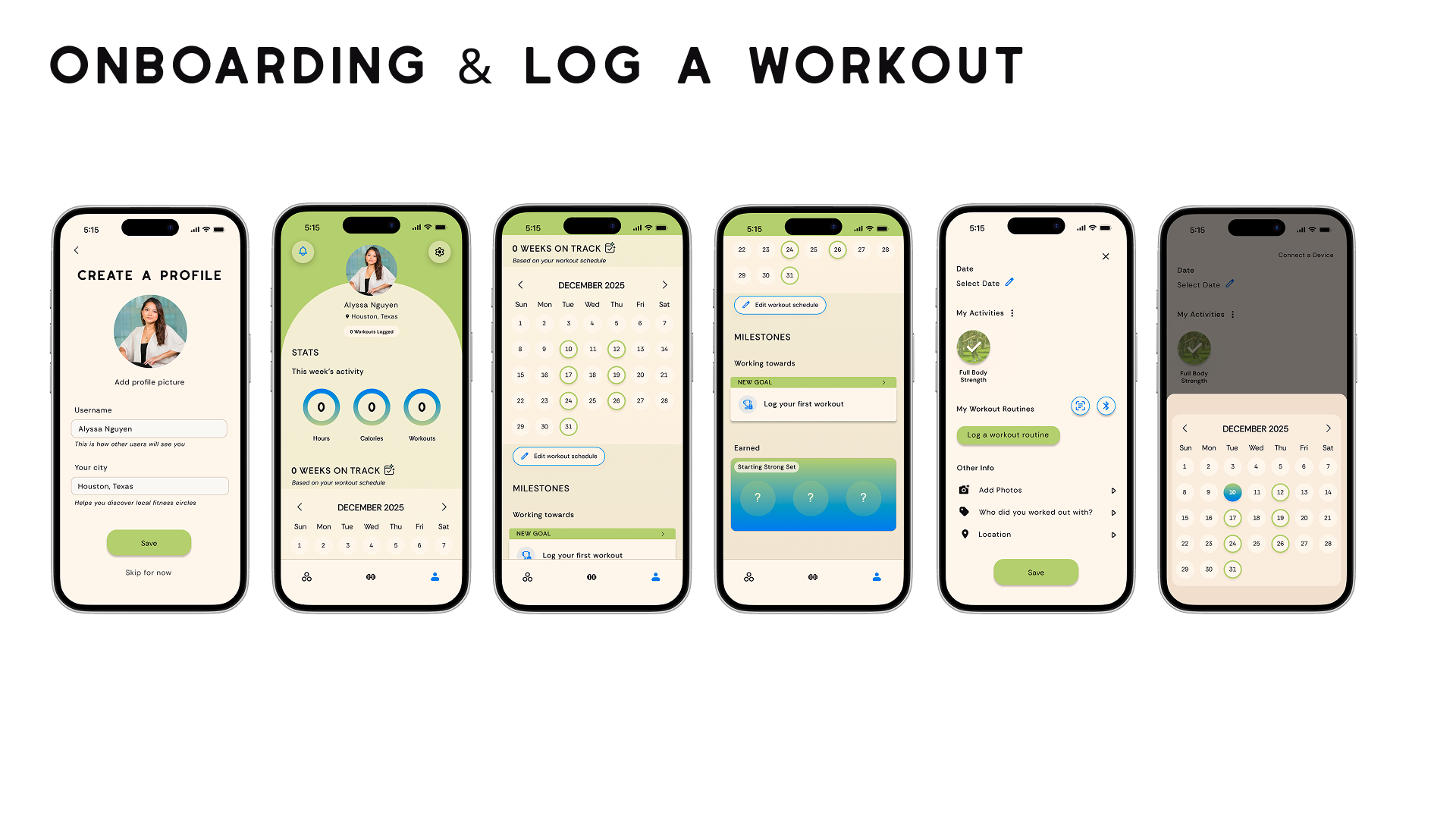
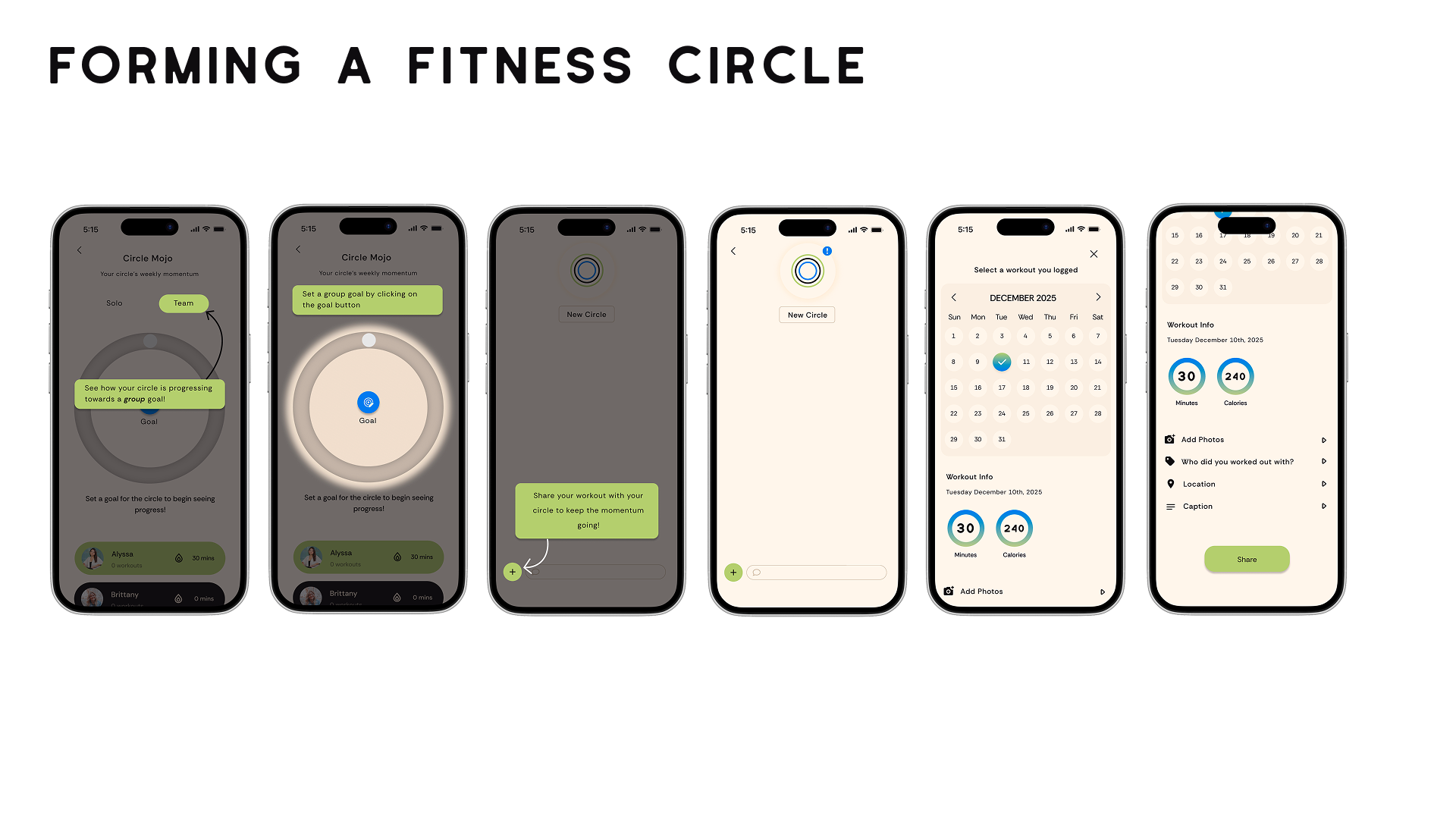
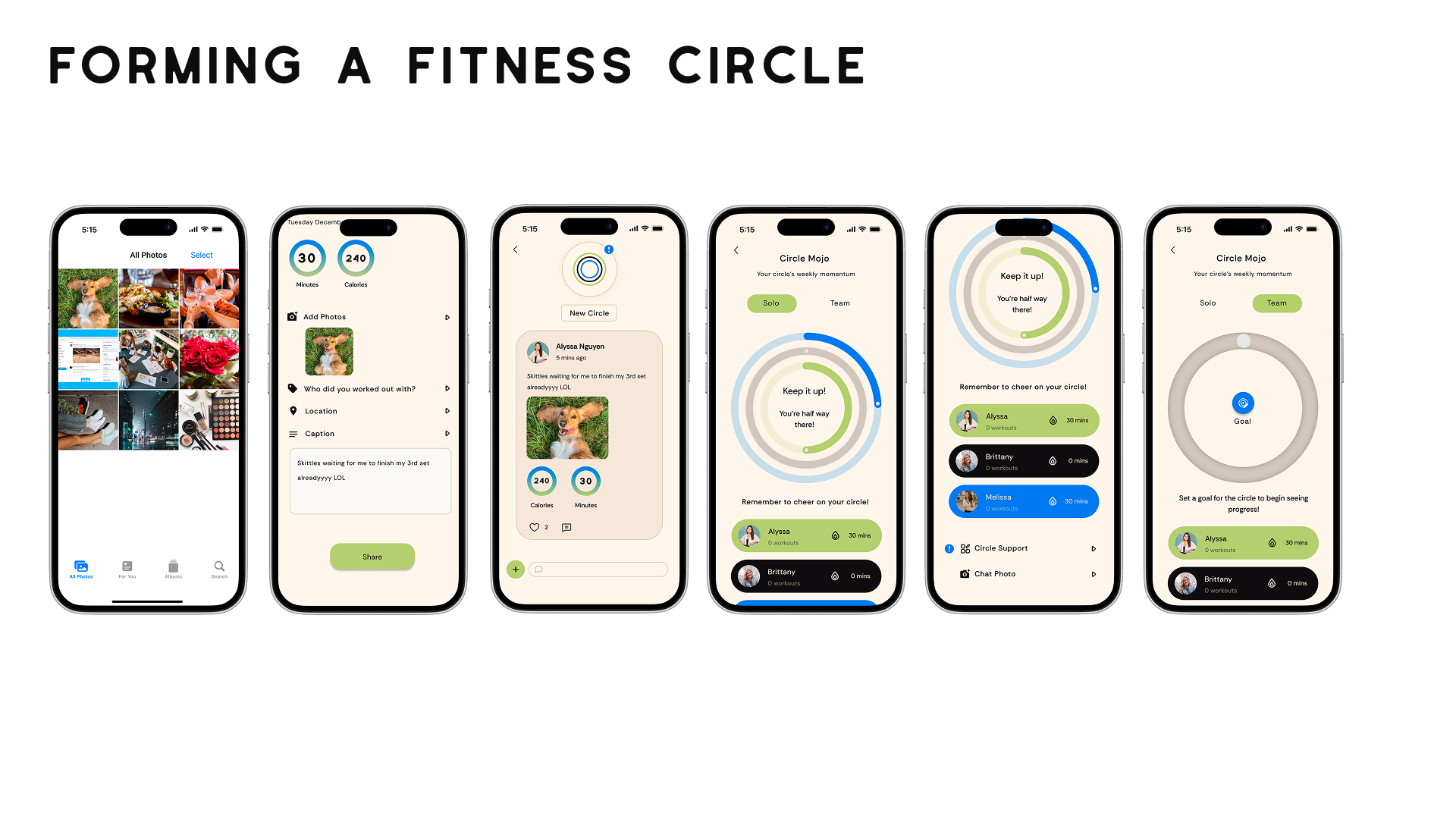
1 / 10
Results
- 3/3users
praised the app for simplicity and not overwhelming them with large amounts of data
- 3/3users
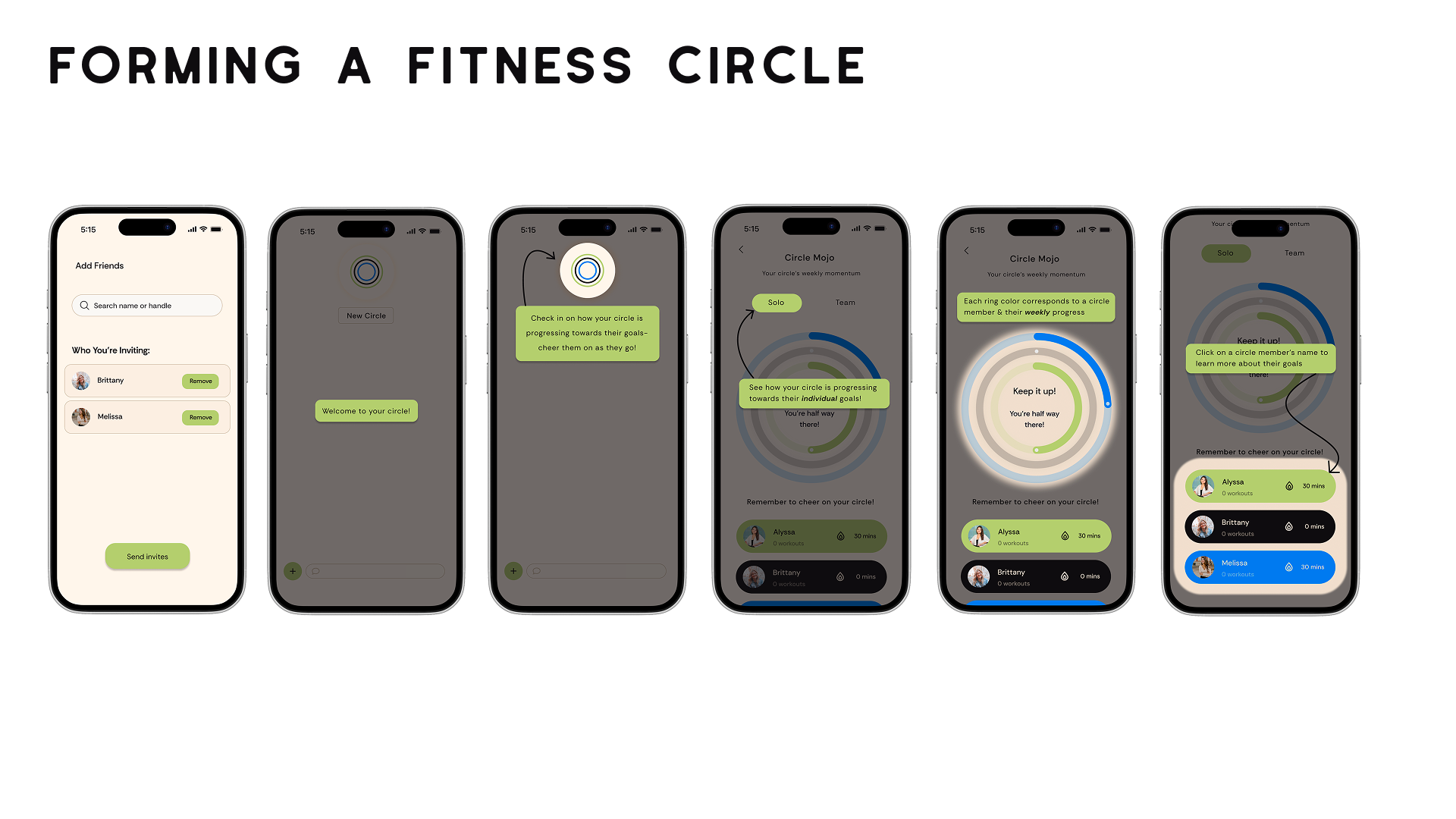
did not intuitively understand how to use the Circle Mojo feature and described the navigation of the flow as "disjointed"
- 3/3users
desired to upload a workout plan or sync a device, instead they had to manually input each exercise
- 2/3users
skipped reading instructions and information throughout the app
Summary of Findings
Users loved that the focus of the app was accountability, not metrics. However, they did not intuitively know how to use the Circle Mojo feature. After being redirected and debriefed, they liked the concept and found it to be something fun to do with friends. This indicated that with improvements there is a possibility for the feature to increase in engagement. Ultimately, what users valued most was the ability to easily log workouts. They requested to use the scan feature, but it wasn't built out. They wanted assurance of future logging shortcuts and asked, "Do workout routines save somewhere or I have to re-enter them every time? Can I still edit a routine after it's been saved? Can I save multiple versions of a routine?" Additionally, the copy throughout the app was too dense for most users to scan. They skipped reading it entirely, which contributed to the usability error rate.
Next Steps
If this project had more time to move forward, I would have completed a full reiteration of the design by building out the scan feature and a dropdown menu for users to preselect their why statements. Additionally, I would have created simulated screens to demonstrate to users how they would look after weeks of repeat usage. This would showcase how workouts are saved and re-entered, accumulated achievements, and possible notifications. I would conduct a third round of testing using mixed methods: usability testing followed up by concept testing in the same session. This would allow me validate if the design changes actually reduced friction and improved clarity, and assess whether the proposed features on the simulated screens could influence repeat engagement.
WHAT I LEARNED
Test the most likely case scenario.
I decided to test the worst case scenario in the Log a Workout flow: manual entry. However, I let the logic of testing the worst case senario override the logic of testing what users actually needed. If I could redo this, I would have built the scan feature and tested it with users.
Test more people.
I tested eight people over two rounds of testing. At the time I was not informed that the industry standard is five people per round. If I could redo it, I would have tested a total of five people in round two instead of three.